
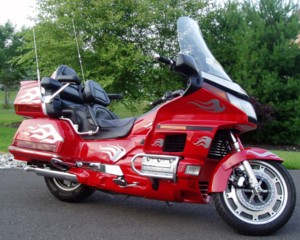
1994 Honda Goldwing Disassembled
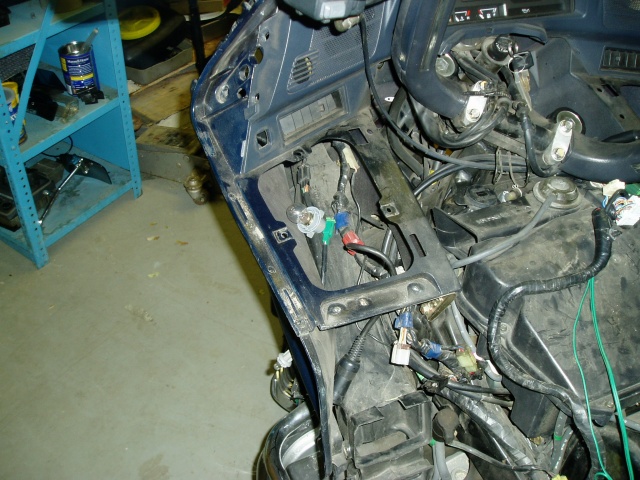
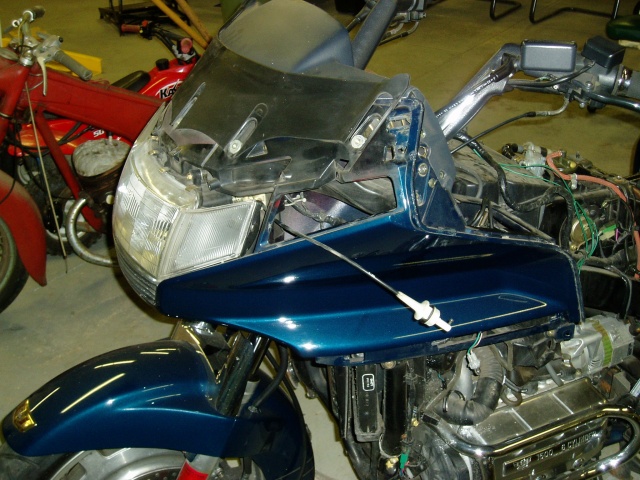
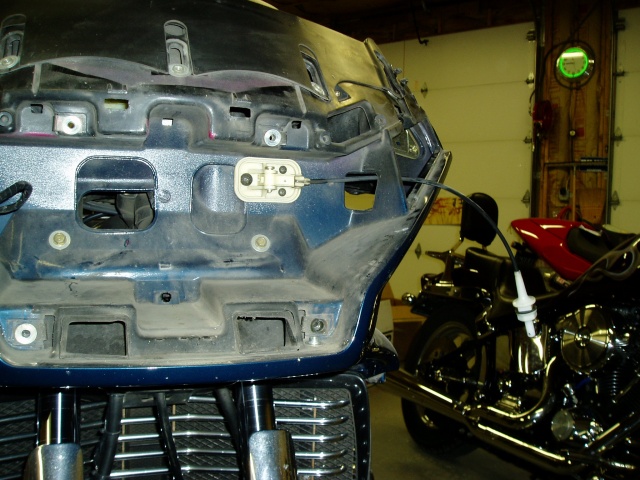
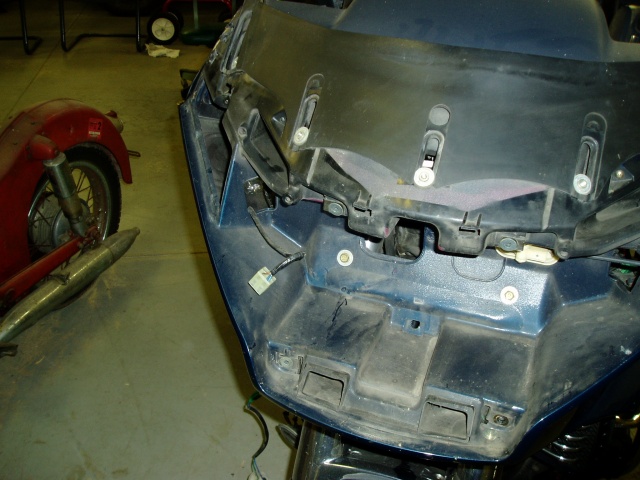
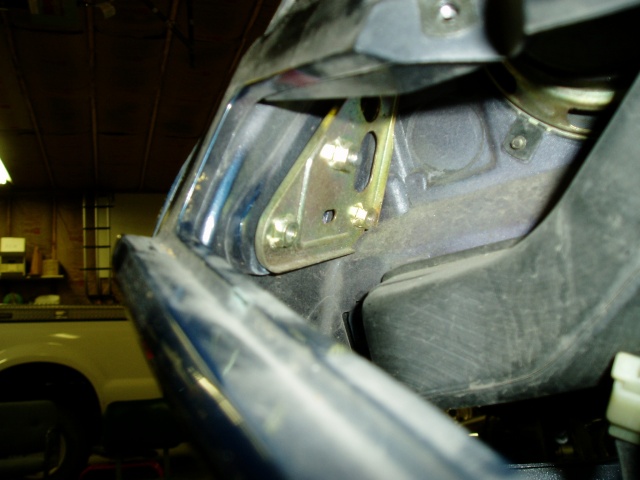
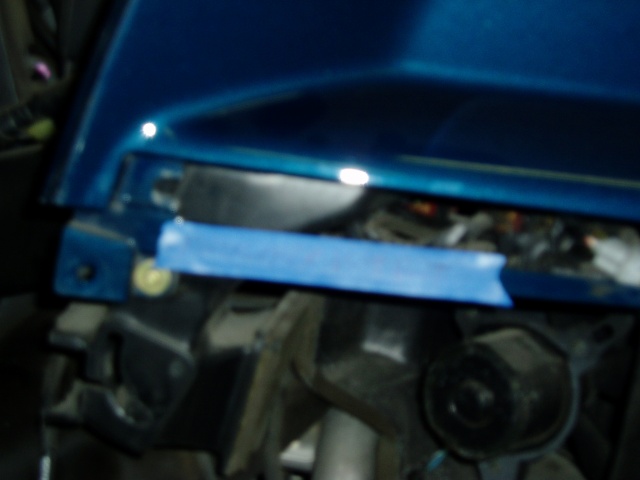
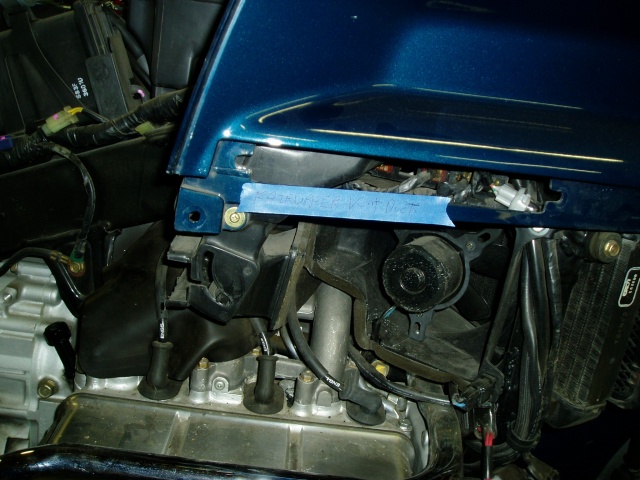
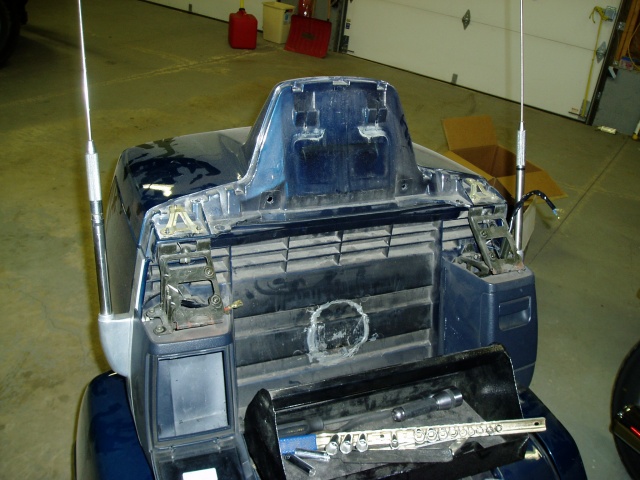
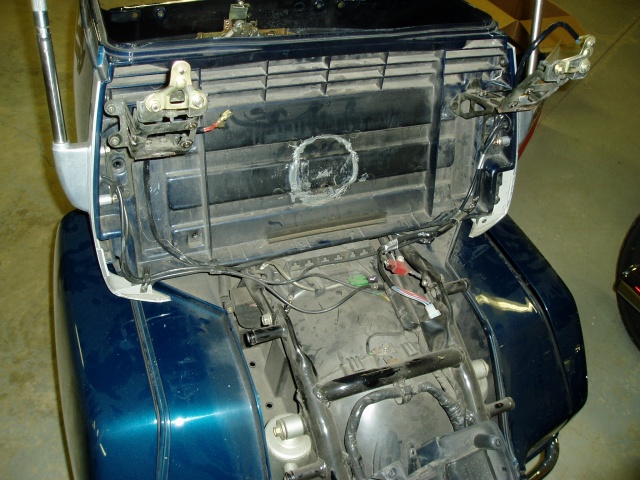
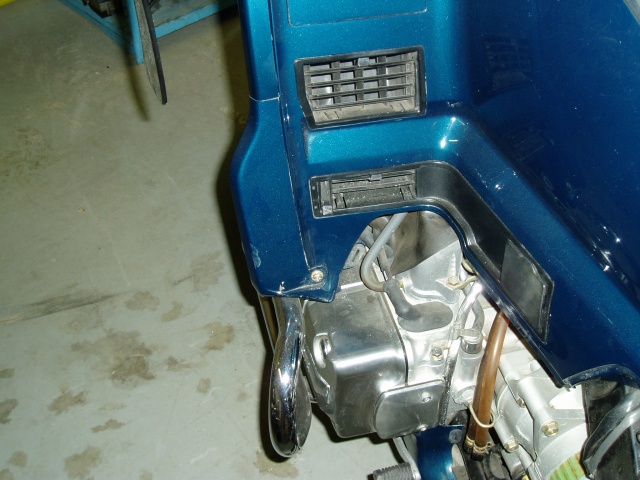
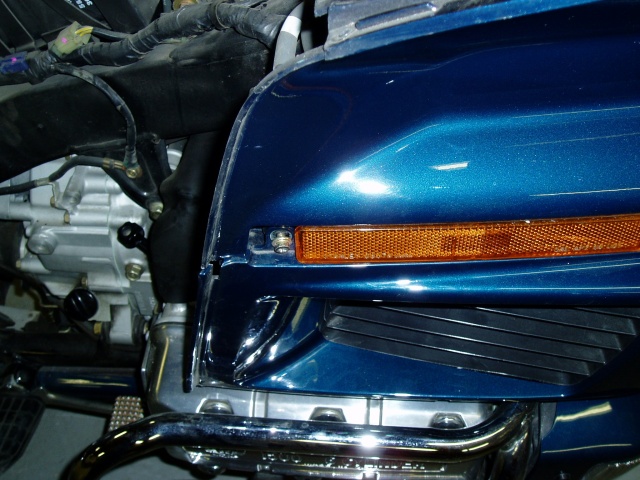
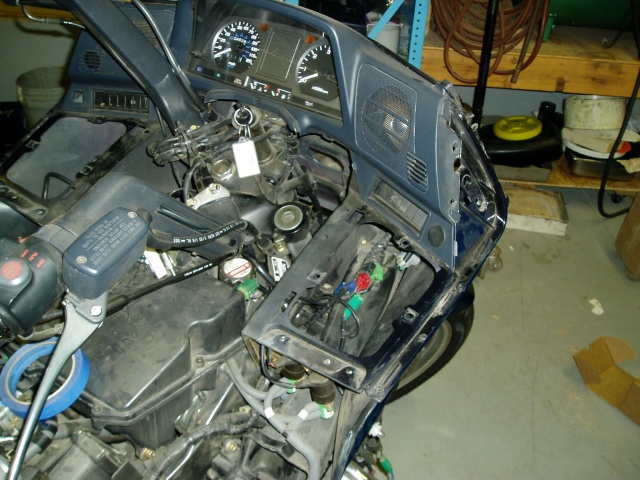
These photos may be helpful to anyone who may have there Goldwing disassembled and needs a reference for reassembly.
Joe took these photos as he was disasembling his 1994 Hond Goldwing for paint. They came in handy when it was time to reassemble the bike as it is now take a look.
History Of The Goldwing
The Honda Goldwing motorcycle first saw the light of
day at the Cologne Motorcycle Show in October 1974, as
the flat-four
cylinder, 999cc GL1000 Gold Wing and was released to the
world for the 1975 model year. While this first
production version
of Goldwing was a success the fact was that the GL1000
didn't really fit properly into any particular
motorcycle class.
Weighing in at 584lbs dry, it was too heavy to be a
sports bike or a cruiser of the day it was marketed as a
touring model
although the first wings did not have any of the touring
essentials like bags and trunks radios etc. This was
left to the
aftermarket to make these accessories and they were very
popular. Honda didn't make their own saddlebags and
trunk
available for the GL1000 until it's last year of
production in 1979. A Honda fairing was not even an option until the
GL1100 Interstate was released in 1980. Honda's claim
that the GL1000 was a touring bike must have turned
people away that
wanted a machine ready for the job. In spite of a rocky
start about the Goldwing's role in life, the GL1000
proved to be a very reliable motorcycle, quite capable
of going very long distances without missing a beat.
1976 saw the standard GL1000 unchanged, apart from a
badly needed grease nipple on the driveshaft. A limited
edition LTD
model was rolled out alongside the standard model and
the LTD had some nice badges, pin striping, a better
seat, flared
mudguards, gold colored wheels and spokes and some more
nice but otherwise unimportant cosmetics. The LTD
version of the GL1000 was only available for that one
model year.
1977 saw the first tentative model changes and the
Goldwing got higher handlebars with neoprene grips, dual
contoured
saddle and chromed heat shields on the header pipes. Chromed upper engine mounting brackets were a nice
touch. More
importantly, the steering head bearings were now tapered
rollers instead of ball types. Front & rear engine and
rocker
covers were now thicker and this was designed to reduce
noise. The fuel tank had an internal coating applied to
prevent rust.
1978 had smaller carburetors, shorter valve timing and
increased spark advance designed to give the GL1000
increased
roll-on performance in top gear, which translated into
slightly less top speed but more torque. The camshafts
were severely
detuned in order to improve low speed performance. The
fuel, coolant temperature and voltage gauges were fitted
to a pod
and mounted on the tank. The kick starter was omitted
this year and wire wheels were replaced with five spoke
Com-stars. A
fully chromed exhaust system, rear indicators moved from
the frame to the rear mudguard and shocks with two-stage
damping in addition to longer forks & springs.
1979 had minor changes CBX style tail light with two
bulbs, rectangular indicators and brake fluid reservoir
and black
brake and clutch levers instead of the previous
unpainted alloy ones. The weight reduced and some of the
performance the model had lost in previous years was
back but that was all as Honda got ready to release its
new 1980 model.
1980 The GL1100 was announced. This was the first ever
Japanese mass produced motorcycle to roll off the
production line
fully fitted out as a proper touring motorcycle. Full
fairing, trunk and saddlebags on the Interstate model,
the un-faired
model was called the GL1100 Standard. The new frame was
stiffened considerably to compensate for the extra
weight of the
Interstate. The larger 1085cc engine was still a
flat-four, but gave more torque and also ran smoother
and less truculently
than the previous model, due in no small part to the
smaller carburetors and electronic ignition. The
suspension was air
assisted handling and comfort. Honda made available
luxuries as a full radio/cassette, CB radio and lots
more.
1981 saw some minor tweaks and improvements, such as a
reshaped saddle which was slightly lower than the 1980
model, the
saddle could be adjusted forward and back by about 40mm,
but this time with a press of a lever instead of the
previous
fiddling with Allen keys. The rear shocks could now take
up to 57psi of air, this being the limit for the rest of
the
GL1100's production life. Orange & Gold pin
striping this
year, a scratch-resistant windshield and better
instrument shielding to stop unwanted reflections on the
windshield. Saddlebag liners were available for this
year as well.
In May 1981 Goldwing production moved from Japan to
Ohio, USA. This has to have been a very clever and well
thought
out move by Honda, creating jobs for Americans to
produce their flagship motorcycle in the USA.
1982 GL1100 had some major improvements in the new Aspencade. This machine had an electrically operated air
pump for
the suspension, accessed from the top of the dummy tank,
instead of the previous tire valve setup. Two-tone
paintwork was
applied to the Aspencade and all the GL1100's got
smaller wheels 18" front, 16" rear and twin pot brake
calipers. The wheel
rims were now wider 2.5" front and 3"rear to allow for
wider tires on all models. Self-cancelling indicators
were fitted to
all models for 1982. All GL1100's from 1982 got better
crash bars which replaced the previous shin bashers The
Aspencade
also got vented stainless steel brake discs, two-tone
seat and trunk pouches, the Clarion type 2 AM/FM stereo
radio, digital dash, CB radio and a clock. The stereo,
CB radio and air pump are available as options on the
Interstate.
1983 was the final year of production for the GL1100 all
models got flatter foot pegs, the passenger ones being
slightly
adjustable. The Aspencade now had eleven spoke aluminum
wheels instead of the previous troublesome Com-stars, had
the
suspension pump controls mounted on the handlebars just
below the dash and got linked brake system. The Aspencade now had
an LCD dash with advanced for the time features. The
choke lever was now operated by thumb on the left
handlebar. Anti-dive
forks (TRAC) helped considerably to reduce wallowing.
Changes to the gearing saw better fuel economy, a
shorter first gear
made the machine faster off-the-line. Changes to the
forks helped prevent bottoming-out and stronger springs
in the rear
shocks meant that the bike could be ridden without any
air in them. The self-cancelling indicators had some
improvements to
make them more reliable and the seat was redesigned to
give the passenger more room. Locating the trunk both
higher and further back gave even more space for
passengers.
1984 The GL1200 arrived continued the trend set by it's
predecessor. Competition from Yamaha's Venture no doubt
hastened
the development of the successor to the GL1100 and the
GL1200 was Honda's answer. There was the unfaired
Standard, the
dressed Interstate and the top of the range Aspencade,
which had the Type 3 audio system. New, stiffer frame
with major
improvements, bigger and more responsive 1182cc version
of the flat-four engine with bags more torque and
hydraulic valve
adjusters, better suspension and handling were the main
attractions on the new Goldwing. A hydraulic clutch was
another
first for a Goldwing. Carried forward from the previous
Aspencade were the now even better air suspension
controls and
linked brakes, and the new Aspencade had a more advanced
audio system and upgraded LCD dash. The front wheel was
a rather
unusually small 16" and this gave the steering a very
light and quick feel. The styling of the plastics was
more aggressive
than the GL1100, the fairing, trunk, saddlebags and
lights all had a more square look which was evident on
many
motorcycles and cars for a while in the eighties. Four
32mm CV carburettors managed to give better response
with a light
feel, without the need for accelerator pumps. The GL1200
was the first Goldwing to drift away from the common
Honda "parts
bin" approach and most of the parts fitted to a GL1200
were unique to that machine and not fitted to any other
Honda motorcycle.
1985 Honda drop the Standard un-faired Goldwing.
Alongside the Interstate and Aspencade, Honda brought in
the GL1200LTD
for this year only. The LTD had computerized fuel
injection, auto leveling rear suspension and a
sophisticated trip
computer. The fuel injection, while not entirely without
it's faults in the real world, transformed the GL1200
into a real
animal which made the carburetor models seem sluggish
in comparison. The LTD was only available in two-tone
gold/brown.
From 1985, GL1200 alternator capacity was increased and
the ignition pick-up coils were mounted at the front of
the engine instead of the rear. An altered top gear made
for smoother cruising in top and the fairing had better
ventilation.
1986 saw mainly cosmetic changes to the Interstate and Aspencade, the LTD was replaced by the SE-i, which came
in Pearl
White only and had little over the LTD except for Dolby
noise reduction on the Panasonic Type 3 audio system
(the Aspencade
got the same audio treatment), an updated 500 watt
alternator, a slightly better seat (which was also
fitted to the
Interstate and Aspencade) and different badges. The SE-i
had ballooned out to over 770lbs. Many people who had
bought the
supposedly unique LTD the year before felt cheated by
what looked like another LTD in the shape of the SE-i in
a different color, the general feeling being that Honda were just
cashing in again this year. An Aspencade badge on the
saddlebags of
the SE-i didn't go down too well with buyers who wanted
their own unique Goldwing to be distinct from the
"lesser" models. The carburetor models were back to 30mm CV's with
accelerator pumps, although it made little noticeable
difference to the
riding experience.
1987 was the final year of production for the GL1200
little change. The SE-i was gone and the Interstate and
Aspencade got
a much plusher saddle. The Aspencade now had cruise
control and trunk mirror as standard, and the lower cowl
(oil filter
cover as Honda called it) and side vents seen on the SE-i
were now fitted to the Aspencade. Color-matched riders
foot peg
accents with a nice chrome trim were also fitted to the
Aspencade this year. The final drive and differential
had been made
much smoother and quieter and this translated into less
chucking and jumping at trundling speeds. All of these
improvements meant that the 1987 models were the
quietest and best sorted GL1200's to date.
1988 the GL1500 finally was here this of course was a
major new model and totally redesigned from the ground
up. The GL1500
now had a silky smooth flat six cylinder engine of
1520cc and a reverse gear, real news for touring
motorcycles in those
days. This was the first mass produced six-cylinder
motorcycle to have a reverse gear and was more in line with the
intentions of Honda's 1470cc six -cylinder prototype M1
of 1972. The M1 had been an engineering exercise to see
what could
be achieved with the available technology of the day and
it is possible that the GL1500 engine designers drew
some
inspiration from the earlier work. All new bodywork on
the GL1500 almost enclosed the whole machine and the
single key
operation of the trunk and saddlebags, as well as the
bodywork design on which not a single screw or bolt
could be seen,
showed that the Honda designers had spent a lot of time
on this bike. The GL1500 was the quietest Goldwing yet,
from the
engine to the exhaust. The GL1500 was a colossal 793lbs,
although riding the thing was so easy that it felt
lighter than
the GL1200. Air assisted rear suspension was fitted to
the new machine. All of the switches lights, indicators
etc. had been redesigned specifically for the GL1500.
1989 saw the ever popular Wineberry color return. The
nice 1500/6 badge on the rear of the right saddlebag was
lost forever, otherwise no major changes.
1990 saw some decent revisions, when the GL1500SE was
placed alongside the GL1500. The SE had two-tone paint,
trunk
spoiler/light, windscreen vent, lighted handlebar
switches, adjustable passenger footboards and foot
warmer vents that
looked better than they worked. Camshaft and carburetor
modifications that year helped to eliminate chucking at
trundling speed and the trunk and saddlebag lids were
made to fit better in order to keep water out.
1991 saw the arrival of the Interstate, which was now
the basic model. The Interstate was 40lbs lighter, due
to the lack of
reverse gear, cruise control and on-board air suspension
compressor, more basic sound system and passenger
foot pegs instead
of boards. Interestingly, Honda lowered the seat height
of the Interstate by almost an inch by skimming some of
the foam,
but didn't do so with the other models. Speaking of
other models, the previous GL1500 was now the Aspencade.
There was also
an Anniversary model (for the 10th anniversary of
Goldwing production in the USA), which was available in
two-tone gold/brown.
1992 the Interstate got a slightly better specified
audio system but no other real news to report then. This
and the
following couple of years were not exactly a time of
inspiration for the Goldwing, although there was some
refinement of
the model. Perhaps the GL1500 design team can be
forgiven for using up all their imagination on the
initial model, leaving
little in reserve for future improvement.
1993 didn't see much change either, the SE getting the
CB radio (previously an expensive Honda accessory)
as standard.
The cruise control now took it's reading directly from
the camshaft, which made it more responsive and from now
on the
1520cc engines all had needle roller bearings in the
rocker arm pivots. Small improvements like this went a
long way and tied up the loose ends.
1994 was no different, apart from the usual new
color
options and it is testament to the design of the GL1500
that Honda
could get away with no major modifications for so long.
The GL1500 was so far ahead of the competition in design
and
specification that it was still selling like hot cakes.
Indeed, the Goldwing was Honda's second best-selling
motorcycle in
the USA in 1994. Nevertheless, the Goldwing community
was becoming impatient for change and the presence of
Honda folks at
major US rallies this last year handing out
questionnaires was an indication that something new was
at least being thought about.
1995 model year saw some real change. On the surface,
new 20th. Anniversary badges, a new chrome screen
garnish, slimmer
side panels to make it easier for the short legged to
get their feet down and some other styling refinements
looked like
not a lot had changed. But under the surface Honda had
managed to make the suspension both lower and stiffer
and this
improved the handling no end. Also, with some foam
shaved from the saddle, the SE and Aspencade were now
40mm lower than
before, which finally made them the same height as the
Interstate. These changes gave the Goldwing a new lease
of life, although there were many who had expected major
changes, like better brakes or fuel injection.
1996 The next two years saw no more real changes apart
from the Interstate being discontinued in 1996. A recall
to have the bank angle sensor replaced was announced
this year and applied to all GL1500 models back to 1988.
1997 saw the SE's lower underbelly panels
color matched
to the main panel color, helping to make the Goldwing
look more
streamlined. Symbols instead of text on the handlebar
switchgear made it easier to read them no matter where
you came from.
Some important but invisible changes inside the engine
were carried out too. The clutch was stronger and some
of the
components from the Valkyrie engine (main bearings,
piston & ring sets, valve springs, con-rod bolts) were
now shared with
the Goldwing. The Valkyrie final drive was fitted to the
Goldwing as well, as was much of the gearbox which gave
marginally cleaner and smoother shifting.
1998 saw quite a few cosmetic differences, nine in fact.
The Aspencade and SE got a new clear plastic headlamp
and clear
indicators (these were only on the American market
models though, Europeans were fobbed off with the old
lights and
indicators), white faced instruments, new fishtail type
exhaust tips that altered the exhaust sound, two-tone
saddle with
better back support for the pillion passenger, new
rocker covers with "1500" gouged into them instead of
the previous
classy logo strip (which had previously been gold plated
on the SE's), a skimpier engine guard (the older one
would have
hidden the ugly new rocker cover if it had still fitted)
and badges that looked more aggressive than before.
These cosmetic
changes gave the ageing GL1500 a much sleeker look,
although such things as the rear lighting setup and flat
looking rear-end were beginning to look a bit fussy in
the new age of curves and flowing lines.
1999 by now everyone was awaiting the much anticipated
new Goldwing, which had been rumored for the last three
years. Nevertheless, the recent cosmetic changes to the
Goldwing were sufficient to keep sales up.
2000 model year saw the GL1500 enter the 21st Century
alive and well a disappointment to all those rumoring
about a new
wing. This was not what was expected for the Goldwings
25th anniversary. The only differences were that Honda
had dropped
the unpopular white faced instruments back to black for
2000 and the SE got chromed rocker covers. There was
also a nice 25th anniversary badge. The long awaited new
Goldwing was announced in April of that year GL1500's
successor.
2001 The GL1800 was finally announced for the model
year. Honda managed to once again to completely redesign
the Goldwing
from the ground up. Honda built an all new aluminum
frame which comprised only 31 parts, compared to the
previous models
130 and the new frame weighed 25lbs less than before.
The new frame was much stiffer than before (a 77%
increase in torsion rigidity and 119% increase in lateral
rigidity) and combined with an engine both bigger at
1832cc's (118 bhp and
125 lb./ft. of torque) and 4lbs lighter than before,
this meant that the GL1800 weighed 40lbs less than the
GL1500. The
frame was produced by Kaiser Aluminum and was designed
in conjunction with Honda of America Mfg. in a project
that started
in 1998. The frame was produced in Kaiser's extrusion
plant in London, Ontario and from 2000 they started
supplying the
extruded sections of the GL1800 frames to the Honda
plant in Marysville, Ohio. Honda technicians welded the
sections
together manually. The whole look of the Goldwing had
now changed from big comfy touring bike to a more sporty
long
distance machine designed to appeal to the younger rider
as well as existing Goldwing owners. Big news also was
the
inclusion of fuel injection and the option of ABS
brakes. Slightly slimmer bodywork dragged the design
into the new
Millennium, yet Honda had managed to make the seat much
bigger. The seat height and diameter of the wheels
remained the
same as before, but the tires were wider and for only
the second time on a Goldwing they were not supplied by
Dunlop, but
Bridgestone. Honda's efforts resulted in a machine that
went and stopped far better than most people had dared
to hope and
riding it gave the impression that it was far lighter
than the GL1500, rather than a mere 40lbs. Available
colors for 2001 were Illusion Red, Black, Pearl Hot Rod
Yellow and Pearl Apollo Blue.
2002 saw no major changes. The GL1800 was too new to do
more than tweak here and there. Three new colors were
introduced
(Pearl Sunburst Orange, Stream Silver and Illusion
Blue-also known as Pearl Chromium Purple) alongside
Black, Illusion Red
and Pearl Hot Rod Yellow with Pearl Blue being dropped
after only one year. The Goldwing was still available
with or
without ABS brakes. The full Honda range of
accessories was available and the aftermarket to their
credit had managed to add many more bits and pieces to
their product ranges.
2003 arrived and the GL1800 continued to be improved on.
No major model or name changes, the ever popular Candy
Red
(different shade to the GL1500, the new color was
called Durango Red) made a welcome return this year.
Stream Silver,
Black, Pearl Hot Rod Yellow and Illusion Blue were
retained. Another orange color was introduced, this
time a darker
Jupiter Orange. The early CD player problems appeared to
have been fixed and the Bridgestone tires that cupped
and wore out
at worryingly low mileages have been replaced by
Dunlop's.
The overheating issue that affected some GL1800's was
now being
attended to with the US Service Bulletin 13. Announced
in September, a US recall for certain VIN numbers to
inspect and
repair/strengthen the lowest cross member of the frame
was of more significance for some owners. A European
recall for this issue in early October indicated that
the problem was more widespread than it seemed earlier
in the year.
2004 No major changes this year either.
Lighted
handlebar and radio switches and a vent
in the windshield were about it. The
rear brake caliper got a heat shield between it and the exhaust
muffler. New colors in the shape of Flare Red,
Kelly Magenta, Pearl Challenger Brown and Titanium. For
some odd
reason known only to Honda, Magenta was cancelled almost
immediately after dealers got the 04's so there should
only be a
few hundred available and Arctic White had been added to the line-up
instead. Candy Red
and Black are retained for this year.
2005 For the Goldwings 30th anniversary the only
changes were
anniversary badges and key and some new colors. Colors
for 2005 were Pearl Yellow, Arctic White, Metallic
Silver, Dark
Gray Metallic, Bright Blue Metallic and Candy Black
Cherry. Flare Red, Pearl Challenger Brown and the ever
popular Candy
Red were casualties this year and Black was also
dropped. The Silver and Pearl Yellow bikes get the same
saddle pattern as the Flare Red had in 2004 and there
was a different opening ceremony on the display of all
2005 models as well.
2006 This time there were some big changes and
refinements. The GL1800
for 2006 came in four variations, which caused confusion
for many buyers at the time. The first was with the
Premium Audio
package, which had six speakers and an 80 watts per
channel external amplifier. The Gold Wing Audio/Comfort
package model
added (in addition to the audio package mentioned)
heated grips and a heated saddle (separate controls for
front and back)
and warm air flaps in the lower exhaust cowls similar to
those found on the GL1500SE. The Audio/Comfort/Navi
package added
a flash-card based GPS system to the other options, GPS
being a long overdue and welcome addition, although it
wasn't
available on European models for 2006. The top of the
line model was the Audio/Comfort/Navi/ABS package. An airbag system was promised during the
2006 production run. In reality, this might mean that we
might see
airbags in September 2006, for the 07 model year.
Other changes included larger radiators and cooling
fans, better rubbers between the engine guards and
exhaust cowls, new
rear trunk and saddlebag lights (the saddlebag lights
won't fit pre 2006 models but the trunk lights will),
face lifted
meter panel and instruments, and bigger rear speaker
pods. Many of the wiring connector blocks are smaller
and neater
automotive types and are a departure from the
traditional Hitachi types. Colors for 2006 were Topeka
Gold, Challenger
Brown Metallic (Titanium), Cabernet Red, Arctic White,
and Black was back for 2006 as is Pearl Challenger
Brown. Honda hadn't been asleep during these changes
either. Several new items were added to the already long
list
goodies. These included a small trunk rack, nice round
exhaust extensions and little speaker pod armrests. Many
accessories Honda and aftermarket for the 2001-2005 models
either won't fit the 2006 models, or need adapted wiring
looms to plug into the new machines.
2007 line-up rolled out with four variations of the
GL1800 as in 2006, but changed once again this year, so
buyers needed
to be awake when deciding which model to go for. The
Premium Audio package for the base model stayed the
same. The
Audio/Comfort model now had the Sat-Nav included. The
Audio/Comfort/Navi model now had ABS brakes and the top
of the range
model was the Airbag model, which also had the
Audio/Comfort/Sat-Nav/ABS. This means that ABS was now
available on the top
two models for 2007. Cabernet Red was carried over from
the previous year. New colors were Billet Metallic
Silver,
Crucible Orange Metallic, Nebulous Black and Dark Blue
Metallic. Two GL1800 variations were available for Europe for
2007. The Sat-Nav and Airbag was included on the GL1800
Deluxe model
destined for Europe market that year and this model also
had ABS brakes and the Audio/Comfort package. The basic
GL1800 model for Europe came minus ABS, Sat-Nat or
airbag.
2008 Goldwing model information was released earlier in
the year than the traditional September and we had all
read the
fine print while the summer was still young. Models are
the same as for 2007 and new colors are Pearl Alpine
White and
Candy Caliente Red. Cabaret Red was retained for this
year and Challenger Brown Metallic (Titanium) and Gloss
Black were resurrected after last years absence.